
Whether you follow our recommendations or not, please rank a full slate of five candidates and do not rank Andrew Cuomo. Find out more about Cuomo.

How does it work?
Strategy
- Rank the person you like best as your number 1.
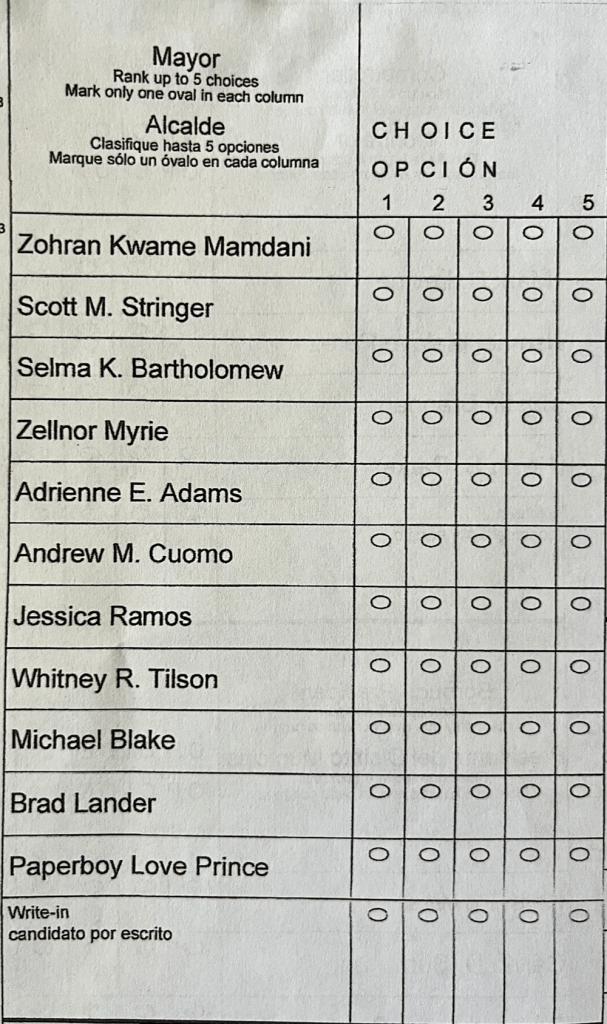
- Continue through the columns, marking your second-favorite in the 2 column, third-favorite in the 3 column, etc. (see sample ballot at the bottom of this page)
- If there are enough candidates, the best strategy is to fill up all five slots.
- Don’t rank the same candidate in more than one slot. Your top vote for them will count and the others will be ignored.
- Don’t rank anyone you don’t want to win. Ranking someone, even in the fifth slot, can only help them and won’t hurt them.
Why Fill All Five Slots?
- If you leave a blank, someone else gets to fill it.
- Filling all five slots does not weaken your top picks in any way.
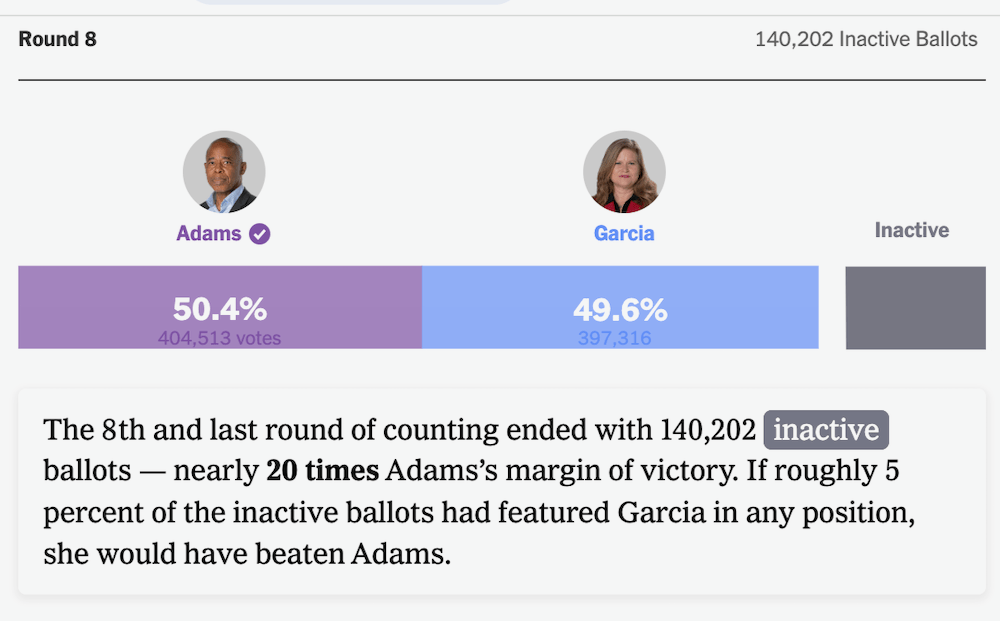
- A New York Times analysis of the 2021 mayoral primary found that if 5 percent of voters had ranked Kathryn Garcia instead of leaving a blank, she would have won.
Why are We Doing This Anyway?
In a 2019 ballot question, New York City voters chose to move to a ranked-choice system in primary and special elections. New York State does not have ranked-choice voting, so you won’t see it in elections for governor, congress and other statewide positions.
Some advantages of ranked-choice voting:
- It gives you more say in who gets elected. Even if your top choice does not win, you can still help choose who does.
- It gives you more choices. You can rank up to five candidates, allowing you to support your favorite candidate without worrying about whether they’re likely to win.
- Some studies have found that ranked-choice voting helps elect more diverse candidates.
- It saves money by eliminating runoff elections.
Sample 2025 Mayoral Ballot
 Inwood Indivisible